

We are pleased to announce a strategic collaboration between Becton Dickinson (BD) and Sinteco, established with the aim of revolutionising medication management in hospitals through the integration of advanced robotics and next-generation digital systems.
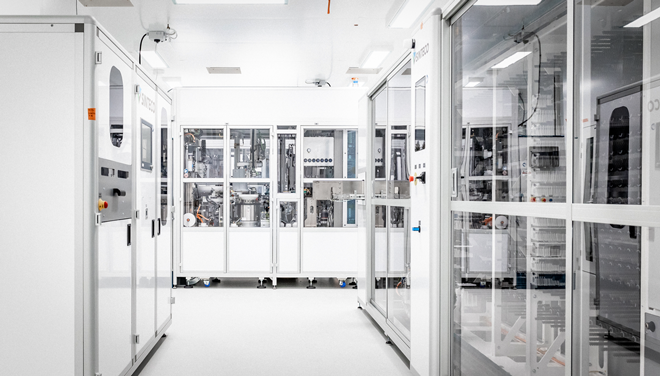
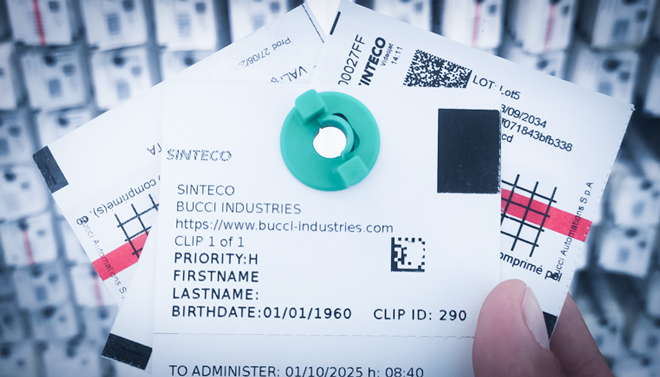
This partnership represents a decisive step towards a safer, more efficient and technologically advanced healthcare model. The initiative is designed to move beyond traditional manual processes by introducing a fully automated workflow capable of converting medication packages into unit doses that are clearly identifiable and traceable throughout their entire journey.
Patient safety at the core
The primary objective of the collaboration is to significantly enhance patient safety. Through full traceability and automation of medication management and administration processes, the risk of human error is drastically reduced, helping ensure the right therapy is delivered to the right patient at the right time.
Greater efficiency for healthcare professionals
The adoption of connected technologies and advanced robotic solutions also improves operational efficiency within healthcare facilities. By automating repetitive, low-value tasks, healthcare professionals can free up valuable time to dedicate to direct patient care, clinical activities and meaningful patient interaction.

A fully traceable medication pathway with modular and scalable solutions
The agreement between BD and Sinteco aims to modernise the entire medication pathway, from receipt in the hospital to preparation, distribution and administration at the patient’s bedside. The result is an integrated ecosystem that ensures full traceability, stronger process control, and higher standards of quality and safety.
The solutions developed as part of this collaboration are designed to be modular and scalable. This enables each hospital to tailor the level of automation to its own logistical, organisational and operational needs, supporting a sustainable and progressive innovation pathway.

Greater Operational Efficiency and Financial Savings
The adoption of connected technologies and advanced robotic solutions generates substantial economic benefits by drastically minimizing pharmaceutical waste. By reducing drug loss, theft, and expiration, hospitals can achieve a direct and indirect saving, estimated to be between 10% and 20% of their annual pharmaceutical expenditure.
This collaboration marks an important milestone in the technological evolution of the healthcare sector and reinforces the joint commitment of both companies to support hospitals in their digital transformation journey, helping to build a safer, more efficient and future-focused healthcare system.